Monday, May 31, 2010

Oh my poor neglected blog

A week since my last post!? I'm really dropping the ball here. Sigh. Remembering the *old days* when Clementine was a newborn and I could blog with her asleep in my lap. Not anymore!

Time is at such a premium these days. I've set a schedule for myself for the book in progress, and it's fairly grueling, but I'm really excited about it too. The trick this summer will be to make plenty of time for doing fun stuff too. Jim and I have always had a difficult balance with life and work, and it's always been at its worst in summer, which is unfair. We would have grand plans for camping and such, and then one of us would always seem to get a deadline that meant workworkwork. And so we've done woefully little camping and exploring in our adopted state of Oregon, where we have now been for more than 9 years. We haven't even been to Crater Lake, for goodness sake!

And then there are the little summer things, like berry-picking on Sauvie Island, the zoo concert series, Saturday Market, trips to the beach, the river, farmer's market, and just sitting at some cafe patio somewhere drinking something, and you know, all that good stuff. I want to make a list of things to not neglect to do this summer. It's Clementine's first summer, and though she won't remember it, I want it to be full of loveliness.

I read a great retweet the other day, which originated from one of my very favorite artists, Dave McKean, who has a visual imagination like no one else on this planet. The tweet was his New Year's resolution, and it was:

"More unequivocal days, that is: WORK days and PLAY days, not guilty play days and distracted work days."

Yes. Yiss yiss yiss. That. Only, in my case it will be unequivocal hours, not whole days. My writing times are: the morning from about 8:30 to about 12:30, and then after Clementine goes to bed in the evening, which tonight was a disastrously late 10 pm! I don't know what happened there. She just didn't want to sleep. Not the usual. But anyway, just this past week I started trying out the cafe nearest my house for writing in the mornings, and it's going well.

I've never been a big cafe writer, because people are noisy! How DARE they go to cafes and TALK? Don't they know writers are at work? Ha ha. I bottle that outrage and keep it to myself :-) But the good thing about this particular cafe, aside from it being only a few blocks away, is that it is plain and small and quiet -- not hip or exciting or especially delicious. There's not much to get distracted by. Well, the other day three women were gossiping about their fellow Girl Scout leaders, and that was a pain, but I drowned them out with my ipod (I was listening to Vas, which is great moody ambient stuff, perfect for the atmosphere of my book).

I do have a writing room at home, and it seems a shame to go spend money on coffee every day, but if I stay home I end up getting sucked into the cuteness of Jim and Clementine. It's inevitable. The tractor beam of cuteness. So: the cafe. Onward, book!

So, those were some unequivocal WORK hours last week. Here are some PLAY hours. Jim and Clementine and I went to this newish restaurant called Slappycakes where the tables have pancakes griddles in the middle and you make your own. It was totally fun! My favorite was the peanut butter-butterscotch chip concoction :-)


A funky mural on Belmont:


Also, we went to a pizza-grilling party at our friends' house yesterday -- Matt Holm, illustrator of the fabulous Baby Mouse, and his wife Cyndi, who makes wine and all manner of cool crafty things, including a pink wig for Clementine when she was a newborn! -- and Matt had made, get this, homemade mozzarella. And it was totally good! Who makes their own cheese??? Show-offs, that's who! Ha ha, just kidding. He also made the pizza dough, which was great. I made something too: a tres leches cake, thank you Martha Stewart. I'd never made that cake before. Have you? It's a super simple cake, and then right after you take it out of the oven, you pierce it all over with a skewer and then slowly pour this milk mixture over it: whole milk, evaporated milk, and sweetened condensed milk, so the cake gets all spongy and saturated. I was skeptical that it would absorb so much milk, but it did. And then top with fresh whip cream + fruit. It was really good, but you know, we had a little bit and left it at the party, and I kind of wanted more, so today I made another one. Oink oink.

Shoot. It's 11 pm already. I'd better get my bones back to work!

Tuesday, May 25, 2010

What I've been doing lately

So what's been up around here lately? Oh, stuff.

-Non-stop rain, for one thing. What is this, the Pacific Northwest?

-I got my hair re-pinked yesterday, and was told afterward, while ordering plantain burritos, that I had "the most perfectly dyed hair" that the counter girl had ever seen. Why, thank you very much :-)

-I saw a movie on the weekend with one of my Portland writer friends, Bridget Zinn -- Letters From Juliet, which stays in your head for about as long as it takes gelato to melt on a hot day. Of the various romantic interests in the film, I thought the 70-year-old Italian, Franco Nero, was the hottest. Here he is at not-70:

-We've been chasing the "portable mess-maker" that is crawling Clementine. Wow! The world is made of things to grab. (Actually, right this MOMENT she is discovering the stairs for the first time. Yow! Don't worry - I'm not just sitting here watching her climb up stairs. Well, okay, I am, but Jim is with her!)
Doesn't she look totally fierce here? Like a little lion guarding her prey, ha ha!

-We had dinner last week with another Portland writer friend, Suzanne Young, at their totally cool new house, which is a geodesic dome in the woods.

-I've been reading Marie Rutkoski's The Celestial Globe, the sequel to The Cabinet of Wonders. Both are wonderful middle-grade adventures set in Bohemia, London, and other exotic locales. Reading is slow-going these days, since the reading-while-nursing days are over, sigh.

-I have collected a stack of library books on siege warfare, but haven't breached them yet. That's my *assignment* for the next little while. Wouldn't it be great to go back to college and take a bunch of awesome history classes? Well, you know: not for a grade. I wouldn't have to write the papers, I'd just sit in on the lectures, do the reading. Maybe some day I will. I didn't get to take enough history classes in college. I got churned out of there in four years -- that's just not enough time!

-I have eaten approximately 2-1/2 mango tango donuts from Voodoo :-), while sharing the other 1-1/2 with Jim, because that's the kind of wife I am. (Hm. I suppose a really good wife would have shared 50/50, wouldn't she? It's okay. Jim is a health nut. That's a lot of donut for him!)

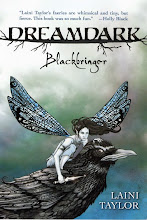
-I got a wonderful fan letter yesterday from a 6th grader in Florida, who told me that as soon as she finished reading Blackbringer, she flipped to the beginning and began again. I LOVE that, because when I really love a book, I do the same thing. (*love*)

-Did I tell you? I found out [from the translator] that Lips Touch sold Indonesian rights. So cool! It will be my first Asian edition. Yippeeeee!

-I have been writing my new book, for which I am filled with love.

-And I have mostly been occupied with something else I will tell you about soon. Soon. (And no, I'm not pregnant -- funny how that's always the first thing people think! Speaking of, though, did you hear that Shannon Hale is going to have twins???)

Have a happy day!

Thursday, May 20, 2010

Today . . .

Today . . . . . . is a good day.

:-)

Monday, May 17, 2010

Clementine, Crawling and Purring


Oh man. :-)

Sunday, May 16, 2010

Super Random Joke :-)

I'm not a real jokey person, mostly because I can't remember jokes or tell them well, but heck, even I can type a joke. This is so random, I totally love it.

* * *

Every year, Joe takes a week during summer to relax at his friend's cabin in the Maine woods. One night after he's just arrived, he's sitting in the cabin when he hears a knock at the door. He opens the door and doesn't see anything--until he looks down. On the wooden porch he sees a small snail. Annoyed, he picks up the snail and throws it as far as he can.

Three years later, Joe is back in the cabin for another summer retreat. There's a knock on the door. He opens it and sees nothing, then remembers. He looks down--and there's the same snail!

The snail says: "What the hell was that all about?"

* * *

HAHAHAHAHAHAHAHAHAHAHAHA...HAHAHAHA! *gasp sputter* ha ha ha. Seriously. Love it. Love the random.

Happy Sunday! Ours if off to a terrific start with the neighbor weed-whacking directly under the window while Clementine was trying to take her morning nap. And this after she mowed and whacked two days ago. ARG! Oh, and it's raining, after a few days of fabulous sun, so there's that. But I have to be indoors working anyway, so who cares.

Cheers!

Friday, May 14, 2010

New Laini's Ladies

As I hunker down to a new batch of Laini's Ladies, it occurred to me that I probably didn't show you the last batch, which are available now HERE.

"When I have a little money, I buy books. If I have any left over, I buy food and clothes." - Erasmus

"There is nothing better than a friend . . . unless it is a friend with chocolate." - Charles Dickens

"You only live once, but if you do it right, once is enough." - Mae West

"Music washes away from the soul the dust of everyday life." - Berthold Auerbach

I also didn't show you the baby announcement illustration I did last month for my dear friends in Amsterdam:
(the canal houses and tulips = Amsterdam; the cats are their cats; and the rocket ship - The Stork! - and robot in the background are at the request of the dad :-) I had so much fun doing this, and I'm so happy Fletcher is in the world. Yay, babies!

The weather got suddenly gorgeous in Portland yesterday, which diminished my productivity considerably. Those of you who live in year-around sun, how do you get anything done? Do you just get used to it? Hm. I know that when Jim and I moved here in the dead of a particularly wet and grey winter, we discovered the huge benefit to creativity that nasty weather brings. We stayed inside our first few months, and developed work habits that have stayed with us. But yesterday was so pretty! We walked to our favorite Thai place for take-out and then went to the park with pad Thai, dumplings, fresh spring rolls, a tupperware of watermelon chunks, and some chocolate-covered coconut shortbread (from my sister). Clementine watched the bigger kids race around the playground, and she got to go in the bucket swing, and she crawled in the grass.

Crawled.

Suddenly she's crawling. Yikes! It's so cute. Then, back home and thinking to get some work done maybe, the phone rang and it was my best friend beckoning me out again, and I gave in easily and so did Jim, and we all went back to Mississippi Avenue for more pineapple ginger ale floats. So there went the afternoon. Here's the food cart:
So pink! And their sign:

And then by evening, Clementine was saying, "Bedtime? What is this "bedtime" you speak of?" and so it wasn't until around 9 pm that I got around to doing a little work. You can imagine how inspired I was. (Actually, I had done a couple of hours of writing in the morning! I vowed to do it no matter what else is going on in a day, and so far I haven't broken that vow.)

Today: more wonderful distractions loom. So I'd better get that couple of hours of writing in now. Laini's Ladies, see you tonight, probably around 9 pm again. Ha!

Tuesday, May 11, 2010

Clementine at Nine Months + My First Mother's Day!

Somehow it's been nine months already. Astonishing. And yet, in a way it feels like it's been longer than that. Memories of Clementine's newborn tininess are fading. Today I was holding her sideways across my body and I caught sight of us in the mirror and she seemed gigantic. She's grown so much, and every day now brings new developments. The motorcycle mouth sound (brrrrrffffffvvvvvvvv), like little boys make playing cars; the squiggling becomes a commando-crawl; maniac sleep rolling, so she covers the surface of the bed; feeding me tastes of her dinner; fake-coughing, and then laughing at herself; total resistance to the changing table, for some reason . . . and so many little things, minute by minute.

It scares me that my memories of the past nine months are not crisp and in order, like the pages of an album. I want to remember everything, but what I'm finding is that new memories are overwriting old ones. Details blur. Photos help, and I started belatedly keeping a little journal of landmarks -- wish I'd done that from the beginning. I feel this mania to record it all, like it's the most important thing in the universe, but I just can't get my act together. Sometimes there's not enough time to both live the days and record them, alas, in which case one must choose to live them, and hope to remember.

Speaking of recording things, my blog has hit a slow patch. You may have noticed that I haven't updated much, and that when I have it's either WRITING or CLEMENTINE. Well, yeah. Pretty much. Add Jim in there, with some friends, some walks, and a smattering of cake, and that's life these days. (Mm. Cake.) I cruise around (occasionally) to blogs and I feel this thing I've felt ever since I started blogging (and before, but more clearly since blogging), and that is a frantic desire to DO EVERYTHING. To fit six or seven lives into my one life, not end to end, but side by side. I want to have the hiking/outdoors life, the arts and crafts life, the beautiful lifestyle/decorating life, the garden life, the thoughtful book reviewer life, etc etc. I envision my blog a certain dreamy way that I don't have time for, and that means I guess that I envision my life a certain dreamy way that I don't have time for.

Choices, dagnabbit. I could take a sewing class and make adorable baby dresses, or I could work on my book. I could go garden-crazy and make a great play/lounge space for summer (and I reallyreally want to!!!) or I could work on my book. It goes on like that. Life has gone fairly narrow right now, which doesn't mean it isn't incredibly rich. The more the river narrows, the more powerful the current. True of rivers, and maybe-sometimes true of life? Can't let it narrow too much though.

One of the great things about having a child is that it makes me see each moment and day as precious for Clementine's sake. If it were only Jim and me, we would go on in our routine of working all day and evening, and not getting out and moving in the world. We would put off that whole "living" thing in favor of working, like life is going to start at some later date, once we're "ready". But for Clementine, we want to build a beautiful childhood with hikes and geese and playmates and toes in the grass and all the wonders that are out there, so we do stuff. Stuff!

On Mother's Day we got out for a little bit and discovered a fun new place to eat, and we walked in the sun and bought gigantic flowers, and we shared a pineapple float that was ridiculously good!

In Portland, food carts are kind of a big deal. We don't go to them much, because we never think of it, but the other day we drove past a cute-looking court of food carts on upper Mississippi Ave, and we needed a snack on Mother's Day to tide us over until dinner with my parents, so we went there. And oh my. So. Good. We chose this one nondescript silver trailer (Garden State) because of a good-sounding sandwich (chicken and cured lemons with goat cheese and asparagus! Cured lemons were the kicker. So good!), and it was DELICIOUS, and we found out after that this cart had won the Willamette Week's "Carty Award" last month for overall tastiness. If you're a Portlander, go by and try this sandwich, though they're more famous for the chickpea-cake sandwich, which looked awesome too. After that we had a pineapple float from the "Sugar Cube" cart = pineapple ice cream + house-made ginger syrup + ginger ale. It was perfect on a warm day. I will go back just for that. Seriously.

And to make this an even more perfect lunch spot: it backs up to the sunny beer garden of the German restaurant Prost, who invite you to bring in your food, so long as you buy their drinks. Done and done.

Here's me with my girl on my first Mother's Day:
The three of us strolled around, bought giant peonies, got coffee, loved our city, loved each other, and then stopped at the Pastaworks deli to buy an assortment of salamis to bring along with fig & anise rolls to my parents' house. It was kind of silly: we made the girl shave us off a couple of meager slices of a bunch of different salamis. (There are a lot of kinds of salami.) She endured good-naturedly.

Somebody slept through the whole thing:

Later, lolling and opening presents (so many presents! Like a birthday. I was seriously spoiled!) and playing with the cats at my parents' house. Here is Clementine offering coconut marshmallows to Bea:
And meeting my mom's tortoise, who is the most *loving* tortoise you will ever meet:
And, my sweeties in mom's garden:

And a couple of recent shots, marking time:


Clementine at nine months, you are our delight. Beautiful and hilarious, determined, sunny, silk-soft, sweet-smelling, and endlessly fascinating, I have not experienced a moment's frustration with you in nine entire months. Even when you're crabby, which is rare, I feel only tenderness and a desire to make you un-crabby again, to which end I will do preposterous dances, invent silly songs, nibble your toes, run for the Cheerios, or just show you yourself in the mirror. Even you can't look at your adorableness and stay crabby!

Welcome, last week, to tooth #3, and to the first hints of sleep-resistance (joy!). You are revving up to crawl in earnest. You aren't quite doing it yet, but you are locomoting in your own squirmy, determined way. The best bait to lure you to crawl? Library books, new ones with crisp crinkly wrappers. Ah, the crinkle! Favorite foods? Steamed carrots, hummus, pear, guacamole. And you were a fan of the pineapple ice cream float!

This next month will bring even more and faster changes, I think. Whatever they are, I'm sure they will be even more fun that what came before them. I love you.

Tuesday, May 04, 2010

Writing about writing, and then ... driving to Seattle again!

So I'm giving a talk tonight to the Writing For Children program at University of Washington. Spoke to them last year too and what an awesome class! Since it's all new students this time, the teacher had invited me to reprise my same talk, which seemed like a sound plan to me. It's time-consuming, after all, to prepare these things. So last night I opened the file to go over it quickly in preparation . . . and, um, oops.

See, it's highly likely that everyone in this class will have JUST heard me speak (maybe twice) at the SCBWI conference in Seattle -- same small community -- and there was a lot of repetition in this talk. So. Last night I prepared a NEW talk. Ha ha! This one is called "Filling Up the Book" and is an offshoot of my Plot talk, focused on: how to fill up an entire book with things happening. Because I totally remember my high school and college writings and strivings, and how much staring at blank pages I did then, while the vasty twilight wasteland of the unwritten book spread out before me, taunting me to fill it. And I didn't and couldn't and didn't and couldn't, and then finally (in my 30s) I rolled up my sleeves and did and could. And now I have tricks and methods and that vasty twilight wasteland is my playground, mwahahahahahahaha!

So, onward to Seattle! And yes, a 3-ish hour drive (each way) for a 1-ish hour talk. Sigh. I'm a patsy. But after this I go into total writerly hibernation to put my theories into nonstop practice. I've been on a good regimen these past couple of weeks of writing EVERY DAY no matter what, at least for an hour, to keep my head in it and not forget what's going on. I hate that, when I stop for too long, and I am NOT GOING TO DO IT ANYMORE!

Have a great day, all!
:-)

Friday, April 30, 2010

Okay, awesome

I hesitate to give you this link, out of fear you will disappear into it and never come back here, but ... sigh. Take it and go with my blessing. But try to come back and visit me. Or, maybe I will run into you there and we can shake our heads in solidarity and go, "I know. Exactly." It's Timothy's Hallinan's amazing series of essays on Finishing Your Novel. I linked to it recently, but in such a way that you could gloss over it. Not so now. It's a must-read if you're learning how to finish a book.

I discovered them while researching my plotting talk, and I've been back a few times, including just now, when I read the "Your Critic" chapter and it totally hit home. Pretty much everything he says resonates with me and makes me go, "Me too! Oh, me too!"

Somewhere in his blog I came across a letter written to him by Helen Simonson, author of the debut novel and big buzzy bestseller Major Pettigrew's Last Stand (which I have not read, but plan to, though I'm 144th on the list at the library!), in which she confessed that it was his website that got her to finish the book, and that while she was in the throes of it, she banned herself from all sites but his. Huh. Cool.

Also: fantastic writing quotes. One day I will comb through his entire site and pilfer them for the margin of Not For Robots, where I keep my own collection of writing quotes. (Not For Robots could really use an overhaul/updating. Maybe I will do that after I finish my current novel!)

Thank you, Timothy Hallinan! And, I just picked up one of your books. Cheers!

Tuesday, April 27, 2010

Thank you, Story Sleuths!

Wow, this is totally awesome. This amazing blog, Story Sleuths, run by Meg Lippert, Allyson Valentine Shrier, and Heather Hedin Singh, has devoted five posts to a study of Blackbringer -- this is the closest I have ever come to having my book taught in school. I mean, they really examine different elements of craft very closely and with examples, and as a writer it is such a thrill to have someone pay such close attention to my work--and to use it as a teaching tool. Wow! I get a glow reading these. Thanks also to their guest poster, amazing Portland fantasy writer Susan Fletcher, for stepping in and adding her own thoughts. This blog is like no other I've discovered, as far as examining the minutiae of craft. Check it out:

Post #1: Point of View in Blackbringer
Post #2: Word Choice & Language
Post #3: Suspense
Post #4: Midpoint
Post #5: Lending Fantasy a Semblance of Truth, an essay by Susan Fletcher

Thank you, ladies! This series is really a GIFT to me.

Speaking of gifts (how's that for a segue???), a certain husband just celebrated a birthday, and we had a delightful family day this'ing and that'ing around town -- do you do that enough? Just go do fun stuff, browse shops and have meals out and stroll? We do not generally do it enough. It's more like while running errands I see other people enthusiastically doing nothing and I get jealous and want to do enthusiastic nothing too. With pancakes, and brand new books, and a general sense of slothful decadence. So the whole day was like that, awesomely. Pancakes were consumed! New books were had! The zoo was strolled!

And man, going to the zoo on a sunny Sunday = MISTAKE!!! SO crowded! This is going to sound small of me, but I get so irked at the zoo when parents keep misidentifying the animals to their kids, particularly when they're standing right next to the sign and just can't be bothered to read it! African wild dogs are not hyenas, and meerkats are most emphatically not "ugly kitties"!!! And yes, dude, there IS a difference between a monkey and an ape! And while I'm on the topic, it is a nerdy ultra-peeve of mine when apes and monkeys are interchanged in picture books!!! Chimpanzees are not wee little swingy monkeys with long tails, yo! Look it up, illustrators!

Okay. Sorry. Done.

So lovely lovely day, and not only that, we had a real live superhero with us. Really. Her name is Awesome Pie!

(This outfit was her birthday gift for her papa. She picked it out herself, really. I didn't even know what was in it :-)
And you know, capes make handy nap blankets, because even super heroes get snoozy.
Man, I am crazy about this kid, and cra-a-a-azy about her papa. Lucky lucky me. Happy birthday, sweetie. Smooch!

Thursday, April 22, 2010

Writing Quote of the Day

(And no, that does not mean I will post a writing quote every day. But I surely could. There are a LOT of writing quotes out there!)

"Just write. If you have to make a choice, if you say, Oh well, I'm going to put away the writing until my children are grown, then you don't really want to be a writer. If you want to be a writer, you do your writing. If you don't do it, you probably don't want to be a writer, you just want to have written and be famous -- which is very different."

--Jane Yolen

Hm. Now, on the one hand, yeah. Totally. But on the other hand, this quote lacks a certain empathy. I mean, it doesn't account for the way fear and paralysis can make some of us tell ourselves stupid things and rationalize writing away. It doesn't mean we're only after the fame. It might mean rather that we have issues, are afraid of failure, have tricky high-strung brains, etc. I do have empathy for all those things, and yet, Jane Yolen is totally right. If you are going to be a writer you must find a way to do your writing. You just must. There are few among you (by which I mean people who find the time to read blogs :-) who really and truly couldn't carve out some time. I had a thought recently, driven by baby schedule desperation, that maybe I would have to get up from like 2 am to 4 am, guaranteed baby sleep hours, to write. I didn't do it, haven't had to yet, but I could and I suppose will, if necessary. Instead, I'm having a second cup of evening coffee right now (9:30 pm) and hopefully will have several hours of productive brain + sleeping baby to work with. Fingers crossed!

Now, to work!

Tuesday, April 20, 2010

Sensory Deprivation Writing Chamber

“The important thing is that there should be a space of time, say four hours a day at the least, when a professional writer doesn’t do anything but write. He doesn’t have to write, and if he doesn’t feel like it, he shouldn’t try. . . . But he is not to do any other thing, not read, write letters, glance at magazines . . . . Two very simple rules, a: you don’t have to write. b: you can’t do anything else. The rest comes of itself.”
-Raymond Chandler

How about that, writers? If you were locked in an empty room for four hours with nothing but your w.i.p., you'd write, right? Me too! Off to set up a sensory deprivation writing chamber! Sure, the Remote Writing Cabin sounds much cuter, but maybe not quite so effective. As I recall, people kept putting books and stuff in it, plus which, knowing me, I'd probably hide in the woods all day trying to catch the mysterious woodland visitors in the act of placing hot pies on the doorstep. (I once crouched in the snow for several hours with my camera, trying to get a picture of my cat using the door knocker. I got the shot, and it kills me that it's been lost! Not to mention the cat. Man, she was a smart cat.)

Well, I am back to writingwritingwriting, and I am going to subdue that unruly w.i.p. Make no mistake! Today I am taking my own advice, which is to write some scenes without undue attachment to the outcome, in the spirit of discovery, the goal being to get to know one of my characters better. There's a wall I keep hitting with him, and I realize it's because he's just not *real* yet. So that's what I'm doing today. You?

(Okay, I'm not really setting up a sensory deprivation chamber, but I should.)

Monday, April 19, 2010

PLOT -- Part III: Structure

[Plot -- Part I: What is Plot?]
[Plot -- Part II: Character, Motivation, and Conflict]

Is structure the same thing as plot? Close. It's the way you organize your plot. I'm going to stick to super-basics here and talk about: the beginning, middle, and end, your basic three-act structure, which is as old as the dramatic arts, dating back at least to the Greeks. Even complex plots mostly fit into this basic frame, for the reason that it works -- it is the perfect frame for satisfying those basic readers' needs.

I know the part everyone worries about is the middle, the big dread middle, but let's start at the beginning with ... beginnings!

Beginnings
This is the "easy part", right? I mean, who among us has not written 11,000 beginnings? Ha! I know I have. But I don't think it's true that beginnings are easy. I think sometimes the reason a story doesn't make it to the middle is because the beginning isn't set up powerfully enough. The beginning has a pretty hefty workload, and must do its work with all appearance of effortlessness.

The beginning of a novel (by which I do not mean the first chapter, but the first third, roughly) needs to:

—hook your reader with a great opening line, opening page, and opening chapter. Provide no pretext for setting the book down. Grab the reader and hold on.

—introduce your characters in what feels like an organic way, and not just introduce them, but establish the connection with the reader. Make the reader care about them.

—introduce the arena of your story, your fictional world, and do so without any offputting amounts of exposition; that’s a trick. But remember, in the very beginning, you don’t really need to explain anything. You might hint at the larger context, but your primary job here is to win the reader’s interest. After you’ve got that, and they’re invested in the story, then you can risk some exposition in possibly chapter two, three, four, but don't leave the reader waiting too long to get grounded. Readers like to know where they are, have something to hang onto. I like to think of it as the difference in inflection in your voice as you ask, "What's going on here?" (intrigued and fascinated), versus "What's going on here?" (irritated and confused). It's a fine line.

—establish an intriguing premise, problem, conflict, or mystery.

—initiate and maintain narrative momentum. That is, get things going right away, and keep them going. Ladies and gentlemen, start your plots!

Got all that? It helps me to think of the scene-craft questions from the last post as I am crafting the beginning of the novel, trying to experience it from the reader's perspective. It's all about crafting an experience for your readers, with intention.

Okay, the dread middle.
Prepping this plotting workshop, I did a quick google on "writing the middle," and this is one of the things that turned up, on an educational website. It made me laugh:

“Fed up with children writing a brilliant beginning to a story and then totally losing it in the middle? To avoid lots of speech, quick endings, or boys killing all their friends off because they don't know what to do with them, try this …”

Yes, resist the urge to kill all your secondary characters. It might be the easiest solution, but it isn't the most satisfying for readers :-)

I also found this, from writer Timothy Hallinan:

“It's kind of a shame there's no way to skip writing the middle of a novel. Writing would be much easier if only readers would settle for a crack-up beginning, then a nicely typeset page that says something like, “Then a bunch of stuff happens,” followed by an absolutely slam-bang ending.

But they won't. They've shelled out for that book, or gone all the way to the library to get it, and they want a middle. It's unreasonable, but there it is.

You have to write the damn thing.”

Yes, you have to do it. I recall that when I embarked on writing Blackbringer in earnest, I had never made it deeper into a novel than a few chapters, and the few times I’d tried, this is what had tripped me up. I didn’t know how to fill up an entire book with things happening. How did authors do that??? Blackbringer was really my novel-writing crash course, my “learn by doing,” and I wrote a lot of stuff that did not make it into that novel. At first it felt like wild floundering. I didn’t know my characters, I wasn’t sure of my plot, dialogue felt so forced. It was not all that fun.

But I kept at it, just kept writing scenes, accepting that there was a good chance they wouldn’t be for the actual book, but just might exist for the sole purpose of making my characters and world real to me. And it worked. I already talked about character and plot being intertwined, and here’s where it becomes totally real. To repeat what I said last time: once you have a fully realized character with genuine motivation, plot happens! Which is not to say it’s always easy, but it no longer feels like trying to pull a rabbit out of a very empty hat.

When you’ve set your story on a course toward a goal, and you know your characters, and you are at home in your fictional world, things actually start to happen. It’s the coolest thing.

I find that it’s really hard to convey this in the abstract. I can talk about it in the context of my own books, which you may or may not have read, but it’ll give you an idea. In Silksinger, one of the main characters, Hirik, is a young mercenary who guards a dragonfly caravan in its travels over the vast and treacherous Sayash Mountains. I had his motivation down—it’s a powerful motivation—but I struggled with creating scenes to bring him to life and flesh out the plot, because I didn’t yet know the texture of his world. It all felt thin and insubstantial.

So I did a lot of brainstorming about his world, specifically, life for the faeries and hobgoblins who travel these routes. Writing is always the act of creating something from nothing, and when you’re writing fantasy this is at its most extreme, because you have to construct the whole world first.

Brainstorming is my best friend. It’s a vast field to play in. You can come up with anything at all, however wild or improbable, and keep what you like and cast the rest aside. And I came up with all kinds of details that began to make the caravan life feel real to me. The cast of other characters, the food they ate, the way they talked, their superstitions and pecking order, all of that stuff. I had fun with it! And a lot of it is stuff that never gets explicitly mentioned in the text, but I had to know it in order to build scenes within an imaginary world.

Once I had a grasp of my world, I started freewriting some scenes. Freewriting is not my best friend. It’s more like the virtuous cousin I know I should like but I really want to kick in the shins. Freewriting is every bit as important as brainstorming to me in the pursuit of creating something from nothing, it’s just harder. But I make myself do it, and it pretty much always works. So I wrote a scene, in the spirit of not being attached to the outcome. And I came up with Hirik’s introductory scene that way, and it was actually fun to write, and natural! I spent some time with my secondary characters, and they totally stepped up and started interacting and they turned out to be jerks, which was awesome; it gave me conflict, and out of conflict came subplots -- subplots!!! -- which enriched the plot and gave me new opportunities to explore my themes.

Soon after that, Hirik’s path crossed with the other main character’s, Whisper, and I started hitting the main “beats” of my story.

This is a term I absorbed only recently: BEATS. I got it from my friend Stephanie Perkins, who I believe got it from her kick-ass editor, Julie Strauss-Gabel at Dutton. I already thought of my plots in terms of moving from one important moment to the next, but I didn’t have a term for my important moments, and now I do. (Thank you!)

The middle of your novel is a series of beats. Each beat is a scene or a grouping of scenes, and you use them to ratchet up tension and mystery and suspense, building and building and building as you compel your character and reader forward. It helps me to have several solid beats to work toward and build around, so the middle stops feeling like this big squishy nebulous blob.

And here is the place to talk about another crucial plot element: pacing, or the speed with which you usher your reader through the beats. You have to pace your beats. You build toward a beat, then it happens, then you trail away from it, transitioning gracefully to your build toward the next one. Think of a roller coaster, how there’s that big build as your car is being towed up to the zenith before the first big drop. All that time, you’re anticipating the drop. Anticipation is every bit as important as the big moment it heralds, and sometimes more important. Anticipation = page-turning. If you just slam the reader with an unexpected beat, you’ve lost an opportunity to lure them through some pages. Of course, there is a place for surprising the reader, just be careful about pacing. Too few beats and the story gets lethargic. Too many, and it gets kind of insane. Have you ever read a book that slammed you so relentlessly with Big Events that soon, nothing seemed Big anymore? Too much !Crisis! and you'll desensitize your reader, which you don't want to do. You're tendering them up for your big moments, so they are putty in your hands!

There should be a steady build toward each beat, with the whole body of the novel being a steady build toward the main beat, or climax.

The middle of a novel should:
—build the tension of your central conflict; raise the stakes
—get your character progressively deeper in crisis
—set up for the climax
—deepen your character relationships
—develop your themes

If the beginning is a showhorse that prances and dazzles, then the middle is the drafthorse, doing the heavy pulling. Here you build, deepen, develop. I know middles can be intimidating, and the ways I have learned to build middles are:

—know your characters; get them talking to each other, get them doing stuff. Scenes will happen. Also, know your world. Seemingly insignificant details can lead to scenes.

—don’t be precious; try lots of scenes without being attached to necessarily using them. Think of it like an artist doing sketches. They’re essential to the end result, even if nobody but you ever sees them, and if you don’t do them, you’ll probably never hit on that perfect composition.

—brainstorm. Come up with a zillion ideas. Know the texture of your world; know way more than you’ll ever be able to fit into the narrative. It gives you a solid place to stand as you build your story. (In that Hirik scene I mentioned, it was what they ate on caravan that was the seed of the scene, and it took on life from there.)

—freewrite. Just do it, yo.

—have a sense of the beats of your story

Whew. That's a lot. Lucky for you, I don't have a lot to say about endings!

Endings
If you’ve done well so far, in an ideal world, the ending might come naturally. (Or it might not.) Here is the place where you:
—solve your mysteries
—establish your characters’ growth/change as a result of the story events
—wrap up your themes, make your point(s)
—resolve your conflict and craft your denouement, the aftermath of your climax, and here you need to choose whether you’re going to give the reader what they want, or not, or some but not all.

The last thing I’ll say is to recommend you read your favorite books and analyze them for plot and structure. Take note of the beats and pacing, and how the author is manipulating you (in a good way) as you read. And look at your own work in progress and really be intentional about everything. You’re both God and Director; it’s all up to you, and a well-structured novel doesn’t [usually] happen by accident. So go forth and plot!

* * *
[sidebar on scene-craft]

"Weaving and Embroidery"

I will generally know going into a scene what has to :
a) happen in it
b) be conveyed in it.

A scene operates on at least two levels, the uppermost being the straightforward: what is happening? And over the course of all this happening, there are subtler things I’m trying to convey: theme, backstory, character development, and I try to find organic ways to embed them in the scene through dialogue, interaction, reaction, etcetera.

I think of these two levels as "weaving" and “embroidery.” This is one of my super-nerdy writing analogies. When Jim and I went to Turkey about ten years ago, we bought a rug, as 98% of tourists do. Well, the kind we bought is called a "gigim", which is basically a loom-woven kilim that is then embroidered. When we went to Chiapas a couple of years ago and bought Mayan textiles, same thing: hand-woven cloth that is then embroidered. And I've long thought of scene-craft in this way.

The things that are physically happening in the scene are the weave of the plot—the long warp threads, the cross weft threads. That provides the matrix for everything else you might "embroider" into it to give it richness and decoration.

What I like about this idea is that it makes it okay to do the basic weaving first—get down the basics of what’s happening, and them come back with your embroidery needle after the fact and add the layers of richness and depth, theme and development. If I had to get all my themes and subtext and subplots perfectly woven in with the warp and weft, I’d go crazy and fail miserably. The great thing about writing is that it is not performance. You don’t have to ever get it right all together in one go. And that goes for plot in general. There is never a reason you have to be afraid. No one is watching!

[end sidebar]
* * *

Well, I think that's all I have to say about plot for now, which is a good thing, because what I really need to be doing right now is working on my w.i.p.! Cheers!

Saturday, April 17, 2010

PLOT -- Part II: Character, Motivation, and Conflict!

[part I of PLOT -- What is Plot? HERE]

I argued last time that your readers' basic needs (akin to food, shelter, and love) are: connection, enjoyment, and satisfaction. So what does this have to do with plot? Well, while you craft your plot, you are trying to meet those needs.

First, let's take connection. For connection, you need, foremost, a character or characters to care about, and better yet: a character who your reader wants to be. I think that the most beloved books are the ones that do this most effectively; they also end up getting the most fan fiction, because the readers want back into the world and the character so badly they’ll take themselves there if they have to. Take Pride and Prejudice. Why are there so many literary sequels? Because women want to be Elizabeth Bennet, and be loved by Mr. Darcy. To be passionately loved by someone amazing, that is a prime fantasy to tap into to make a connection with your reader.

Another is the "unlikely hero". Harry Potter, Frodo Baggins, two beloved fantasy characters: both seemingly small and powerless, and both proving, over the course of excellent plots, that they are equal, against all expectation, to the extraordinary role that Fate has thrust upon them. For any reader this is heady. For children, quintessentially small and powerless, this is a dream they will want to inhabit.

So strive to create characters who readers will want to be. Think about the things that have this effect on you as a reader. What are they? What are the set-ups, the situations, the character-types? My ultimate wish as a writer is to write books that readers yearn to climb inside of, and the first and most direct way to do this is through a potent connection with character.
There is a saying, “Character is plot, and plot is character.” I don't know who said it, but wherever it comes from, it’s true. I said before that plot is: your characters living their way through the story.

To take that to the next level, your plot is created and driven by your characters’ desires and actions, so one of the most elemental things to a strong plot is:

What do your characters want? It is essential that they be driven by a powerful motivation. I took a workshop with the writer Dan Greenburg at an SCBWI conference, and he said, “Characters must have a desperate goal that is continually thwarted.” And he said, “Never let your character forget his motivation or stop acting on it. And, never stop blocking him. The author is a rascal, rooting for his protagonist even while thwarting him.”

Out of your characters’ motivations, and the things you cook up to thwart them, you build your plot.

Here is a secret: When you have fully realized characters with genuine motivation, plot happens naturally!

(Really. It's so cool.)

And here’s something to consider. In all of my books and stories so far, it is not the motivation of the protagonist that creates the plot. It is the motivation of the antagonist. In adventure, horror, and fantasy that’s often the case. In other genres, maybe less so. The villain wants something and sets about getting it, or making it happen. The main character wants the opposite, and here you have another essential element of every plot:

Conflict.

You must have a compelling conflict. What is it? Who wants what, and what’s in the way? In Harry Potter, Voldemort wants to return, and Harry must thwart him. In the Lord of the Rings, Sauron wants to return, and Frodo must thwart him. You see there, at the most basic level the plot is the same, it’s what you do with it that turns it into a novel.

In Pride and Prejudice the plot is protagonist-driven. The two eldest Bennett sisters hope to marry well and also for love (that’s their motivation), and all manner of things thwart them, including themselves (conflict), until at last they get a happy ending (conclusion). One of those lists of basic plots claims seven basic plots, and they are: Man vs. Nature, Man vs. Man, Man vs. the Environment, Man vs. Machines and Technology, Man vs. the Supernatural, Man vs. Self, and Man vs. God/Religion. What all of those plots have in common is the versus. They all hinge on conflict.

What is your conflict? Know it, develop it, make sure it’s compelling and believable and strong enough to build your entire novel on, because it’s your foundation.

I’d been working on Blackbringer for a few months, maybe, and I didn’t know exactly where it was going. I was still figuring out the plot and my intentions and I was flailing a little. I realized I hadn’t decided on a conflict, and once I zeroed in on that, and put my mind to that, everything started to click into place.

I said earlier that the readers’ basic needs are: connection, enjoyment, and satisfaction. Character motivation and conflict are integral to all three of these things.

—Your connection with your character depends upon believing in the motivation and being compelled by the conflict.

—enjoyment comes from losing yourself in an exciting and rich tale, which is driven by the ups and downs of conflict.

—and satisfaction is the result of a denouement, or resolution of conflict, in which the characters get or don’t get what they want. The denouement is the events after the climax and before the actual ending. In Blackbringer and Silksinger I have classic denouements, with the large cast of characters being dealt with in turn, a sort of: where are they now and where are they headed? I had great fun writing those parts. The tricky business of the climax was past, now I got to play, and a big part of the play is the pleasure of giving the readers what they want (or at least most of it), that sense of satisfaction that makes them close a book with a feeling of yum. That heavy-lidded, just ate a delicious meal yum.

But here I am leapfrogging ahead to endings before I have talked about beginnings and middles! So, next up: Structure. Next time!

* * *
[sidebar on scene-craft]

Crafting the Reader's Experience
There’s a handful of questions I keep in mind as I’m writing, and they pertain to the reader’s experience at any given moment. As a writer, you are crafting the reader’s experience, every step of the way, and these are things I ask myself in an effort to keep the reader where I want them.

The questions are:

What do I want my reader to know?
How much information am I doling out to them? Every single thing they think and feel while reading is shaped by me. Do they understand fully what’s going on, or are they only seeing a mysterious piece of it? Do they know more or less than the character knows, or do they know exactly what the character knows? This is something to play with for effect. When the reader knows something the character doesn’t, or vice versa, you can use that to build suspense.

What do I want the reader to wonder?
What is the mystery or suspense at this particular moment? What is keeping them turning the pages? There must always be unanswered questions and/or unresolved narrative threads. I read a book recently, a bestselling thriller called The Girl Who Played With Fire, and there was a mention early on of an incident in the protagonist’s childhood that she referred to only as "All the Evil," and you don’t know what it is, and you really really want to find out, and it isn’t revealed until very late in the book. And that is one of the ways an author keeps you turning pages, with a mystery.

Always remember: if you’re gearing up to resolve one of your page-turner mysteries, or if you’re tying up a suspense thread before the end of the book, you have to introduce new ones first, or you lose your grip on the reader. It’s like you have them on a fishing line and you’ve been steadily reeling them in and reeling them in and then bam, just like that you let them go flopping back out again. You must keep them wondering, keep them reeled in. Never give them an easy place to stop reading.

What do I want the reader to hope for?
What does the protagonist want? The reader needs to be manipulated into wanting it too.

What do I want them to fear?
What is at stake? Something must be at stake. In Pride and Prejudice, what’s at stake is Lizzy’s entire future. Will she be lucky enough to marry for love? In Harry Potter and Lord of the Rings, we fear the death of beloved characters, and bigger than that, we fear the ascendancy of true evil. Whatever is at stake, it must loom over your novel, like a shadow when a cloud drifts in front of the stun, and all your scenes must be crafted so the reader remains ever-mindful of its presence.

These questions are about scene-craft. You want to be in conscious control of everything your reader thinks, feels, knows, wonders, hopes for, and fears.

[end sidebar]
* * *

Remember: The secret is that once you have a fully realized character with genuine motivation, plot happens naturally!

[part III of PLOT -- Structure HERE]

Tuesday, April 13, 2010

PLOT -- Part I: What is plot?

In the aftermath of the wonderful Western Washington SCBWI conference, I thought I'd share here my notes for the Plotting workshop I gave the other day. Plot is something that people ask me about a lot, and I find it is a hard thing to talk about in the abstract. I mean, you can talk in either the most basic, generic terms, or you can be really specific and talk about plots of particular books, etc. But I wanted to find something in between, a way of discussing plot that would be useful to people working on their own novels -- that's always what I strive for in my workshops. I want people to leave with a new way of looking at their w.i.p. and be itching to get back to work.

The below thoughts on Plot are the beginning of something I am sure I will spend much more time contemplating, refining, over the years. I love to think/write/talk about the writing process, and here is my first crack at tackling PLOT. Whew!


* * * * * * * * * * * * * * * * * * * * * * * * * * * * * * * * * * * * * * * * * * * * *

What is plot? Is it really this most basic thing? Yes: it is! Plot is the answer to the question, What happens?

There’s another elementary question we ask about stories and that is, What is it about? And that’s not exactly plot. That question tends to premise and theme. If someone asks me what Blackbringer is about, I might answer: it’s about a faerie who hunts devils. That’s the premise. Or I might say: It’s about personal responsibility and claiming our own power. That’s one of the themes. But plot is: the sequence of events over which the premise and themes play out.

Plot is: your characters living their way through their story.

Our job as plotters is to come up with a sequence of events that allows our characters to live with range and vitality, through ups and downs, suspensefully, and culminating in some kind of satisfying growth or victory or accomplishment, while along the way providing ourselves opportunities to flesh out our themes and make the book as rich as possible.

Author Sarah Waters said, “Novels are for readers, and writing them means the crafty, patient, selfless construction of effects. I think of my novels as being something like fairground rides: my job is to strap the reader into their car at the start of chapter one, then trundle and whizz them through scenes and surprises, on a carefully planned route, and at a finely engineered pace.”

Sarah Waters’s fairground ride, her carefully planned route and finely engineered pace, is plot.

Scenes are the cellular unit of plot. While plotting we:

1. Craft individual scenes that give us opportunities to show our characters being and doing and interacting.
2. Craft the overall story arc and progression of scenes, how they fit together to tell the story, and how they amp up toward the climax.


* * *
[sidebar on scene-craft]

Narration vs. Dramatization
Much of storytelling is a balance between narration (telling the reader something), and dramatization (showing the reader something). One of many choices we make again and again as writers is when to show and when to tell. You know the old saw, "Show, don't tell." ? Yeah, well, sometimes it is better to tell. There's a place for both. There's a lot of "telling" in Lips Touch (less in my Dreamdark books, but it's still there). Each of the three story introductions is narration.

... This is the story of the curse and the kiss, the demon and the girl. It's a love story with dancing and death in it, and singing and souls and shadows reeled out on kite strings. It begins underneath India, on the cusp of the last century when the British were still riding elephants with maharajas and skirmishing on the arid frontiers of the empire. The story begins in Hell.

I'm totally telling the reader what's what here, from a detached perspective. But that's not always the desired approach. Sometimes you need to be closer to the action, closer to the character. For example, at the end of my story Hatchling there is a scene in which Esme gets a kiss. In the original version, this moment existed only as one fragment of a narrative montage, reading, "... Esme got a first kiss of her own ..." That was all! In a line note, Arthur Levine, my editor, wrote: "I think you need to dramatize this moment." And he was right! Though it takes place during the denouement (aftermath of the climax) and is not critical to the main action of the story, it is an important moment. And, it is a potential fun moment for readers. Why jip them? Why not show them the kiss. And so I expanded it into what it is now (p. 261-264). Thanks, Arthur! (Love your editor, writers. Really.)

Another way of looking at narration vs. dramatization is: are you outside the scene peering in, an observer? Or are you inside the scene, living it right alongside the characters, or as the characters? Both are valid ways of writing a scene, but both create a very different feeling in the reader, and are used to different effect. I would argue that any important scene needs to be dramatized, to make the reader feel it. (But it's possible I could persuaded to concede to examples. There are just so many ways to write!)

[end sidebar]
* * *

So we have a definition of plot: the stuff that happens. So, how do you craft a good plot?

You’ve heard it said that there are only seven plots in all of literature, or twenty, or three, or whatever. The exact number is a quibble, but there are few, for the reason that our wants and needs as consumers of story are simple and rather primal, just as our basic needs as human beings are simple and primal: humans need food, shelter, and love (clothing optional depending on climate).

Readers need (this is my own list; you might argue):
--connection
--enjoyment
--satisfaction

... and as it turns out, there are some basic storylines that satisfy these needs in a deep and pure way, which is why most stories are a variant one of a few basic plots. It is, of course, what you do with them that counts. Chekhov said, "There is nothing new in art but talent." It is not necessary to be conscious of these basic plots or your appropriation of them while writing. Much of this will be unconscious -- you could say that plots are part of our collective unconscious -- but you want to understand readers' needs and how to meet them, if you want your stories and books to be loved.

My own goal for my novels is to create books that readers will want to climb inside of and live in, characters that readers will want to be.

Next time: Character, Motivation, and Conflict. Come back soon!

[Plot -- Part II: Character, Motivation, and Conflict]
[Plot -- Part III: Structure]

Monday, April 12, 2010

Back from Seattle!

We're back from Seattle after another amazing SCBWI conference -- this one was certainly a different experience from all the others, since we had Clementine in tow. I couldn't sit in on workshops (though I could still hear the keynote speeches from the hall), and I was busier than usual, since I delivered my first-ever keynote (yeeee! It went well!), plus a workshop on plotting**, plus doing manuscript critiques. I took barely any pictures -- usually I come home with a full camera card, but not this time. And I retired early each evening to settle Clementine to sleep, so there was much less gossiping socializing :-) Still, it was wonderful, and Clementine was a little perfect pie every single moment. She got her share of attention. How could she not?
My goodness.

She was a little bit of a mini-me on Saturday, with both of us wearing green and pink. Totally unplanned, of course, ha ha. Isn't that cupcake dress great? Thank you, mom, for the awesome Baby Boden stuff! (Do they make that in my size?)

Anyway. Sorry. I can't help it. I talk about Clementine a lot. But the conference was fantastic, as always. The Western Washington chapter of the Society of Children's Book Writers and Illustrators is AWESOME. You can read a summary of the talks and workshops at their website HERE. I recommend this conference SO HIGHLY. Go next year. Go! Even if you don't live in Western Washington. Make the journey. (Hi to the lovely [shoot! I'm forgetting your name!!! Elizabeth! Yes, Elizabeth??] who came all the way from South Dakota!)

For us, it was a mix of catching up with some of our favorite people, plus meeting new-favorite people. Here's where I would usually do a long post illustrated with oodles of photos, but I have barely any photos! Dagnabbit. I do however, have this one of dinner last night:
An unofficial post-conference affair for some of us who hadn't yet scooted off to the airport or freeway or wherever. That is, to my left: Elizabeth Law (Publisher, Egmont USA), Jay Asher (author NYT bestseller Thirteen Reasons Why), Matt Holm (illustrator, Baby Mouse), Johanna Wright (author/illustrator of picture books), front row r to l: Suzanne Young (author, The Naughty List), Peter Brown (author/illustrator of picture books), Paul Rodine (children's book agent), Jaime Temairik (illustrator), and Jolie Stekly (YA writer).

And here are the ladies in pink, Clementine and me with Suzanne at the Chateau Ste. Michelle Winery in Wootinville WA where the faculty dinner was held Saturday. Delish.

Of course, we acquired a stack of new books in the conference bookshop (thanks to Secret Garden Books), by faculty members Peter Brown:


and Mitali Perkins:
(I finished reading this last night and it's wonderful. I couldn't put it down!)

I also picked up this picture book by attendees Steffanie and Richard Lorig, who I did not meet. The book is a super-fun read aloud, complete with monkey sounds :-)

**tomorrow: I will give notes from my workshop on Plotting. I wasn't going to. I spend so much time developing my workshops and talks that I like to hoard them for future use at other conferences and events, but I think this is one I will share. So come back tomorrow for a discussion of Plotting Novels.

Ciao! (Now, one of my best friends had a baby last night in far-off Amsterdam, so I am going to be doing art today for a birth announcement. Welcome to the world, Fletcher! You are beautiful!)

Friday, April 09, 2010

See you next week!


Off to Seattle tomorrow for SCBWI, yay! I do so love an SCBWI weekend. As always, the night before going somewhere, here I am at 1 am trying to get organized: printing out my speech, wondering what to wear while giving that speech (I'm thinking polka dots), etc. Getting sleepy, though.

Have a wonderful weekend. Maybe I'll see you in Seattle?

(P.S. Check out this cool post on p.o.v. in Blackbringer. Thank you, Allyson. Awesome blog!)

Sunday, April 04, 2010

Happy Easter from Little Bunny!


Hope the bunny brings you treats :-) Have a lovely day!

Wednesday, March 31, 2010

March mini-NaNo, the conclusion!

Youch, Wednesday again! I'll tell you right now: if you finished your zero draft, you can have my cupcake, because I did not! Arg! So many things have come up in the past couple of weeks, the most recent of which is that Jim is sick (poor sweetie!) so I have Clementine right now instead of it being my work time, which means: quick blog post!

If you met your goal, HUGE CONGRATULATIONS!!!

I really really hope a fair number of you made great progress on your goals this month! I did so-so, but am REALLY READY to recommit and keep moving forward. However, I have to wait until mid-April to really get working again, because I have a number of other things to check off my list first, like finishing up workshop prep for the plotting workshop I'm giving at the SCBWI Western Washington conference (are you coming? You should come!) the weekend after this, not to mention the keynote I will also be delivering (my first keynote!). Sooooooo, without further ado, here's Mr. Linky. Sign in and give a quick status report. In comments, please share your ongoing plans. I loved seeing your progress this month!


Now, for inspiration, HERE is a video that Stephanie mentioned in comments last week (for some reason I couldn't find an embed code). It's great. I want to have that attitude about writing -- wouldn't it be marvelous?

Also, randomly, I came across these ingenious ways of solving one of the world's enduring dilemmas. I'm sure you've faced it, maybe you cope with it every day. ha ha. It is: how to carry your cookies and coffee at the same time??? Never fear. Ingenious minds are on the job! The solution might be the mug (cookie slot included), or it might be cookie cutters!


Enjoy!