"I don't love writing. I love having written." I'm not sure who said this but for many years I identified with it whole-heartedly. I've always wanted to be a writer - I never wanted to be anything else, really - but for a big stretch of years I completely lost joy in it. I lost the fun of storytelling that had made me sit on the porch as a kid and write tales of magic crayfish. I was still "writing", but what emerged as my great pleasure as I got older was wordplay. Arranging beautiful sentences, reading them aloud, revising them, listening to the ebb and flow of words, tasting the sounds of the prose.
This is not enough.
As the years went on, I honed my sentence-writing skills, kept a whiney journal, got A's on school papers, read great fiction and pretended not to notice that I wasn't writing what I loved reading: stories! All I had to show for my dream of being a writer were notebooks filled with beautiful sentences - at most, paragraphs - that led nowhere. Ah, and there were synopses and ideas for stories, but I couldn't figure out how to make the leap from planning them to actually writing them. My junior year of college I made some progress and took a writing workshop where I finished several stories: Emily, Blindfolded; and The Muse of Suicide. I also took a class from Anne Lamott at the bookstore where I worked all through college -- she was a single mom who wasn't yet quite famous, and I had the great good luck of catching her then, when she still taught this little class to make ends meet. I submitted The Muse of Suicide, a self-satire of the months I lived in Paris after highschool trying to like espresso and wishing I was a tormented "artiste." I loved that story, and Anne Lamott liked it too. She gave me one of the greatest compliments of my life. On my story she wrote, "You are the real thing. Keep writing."
So I stopped writing.
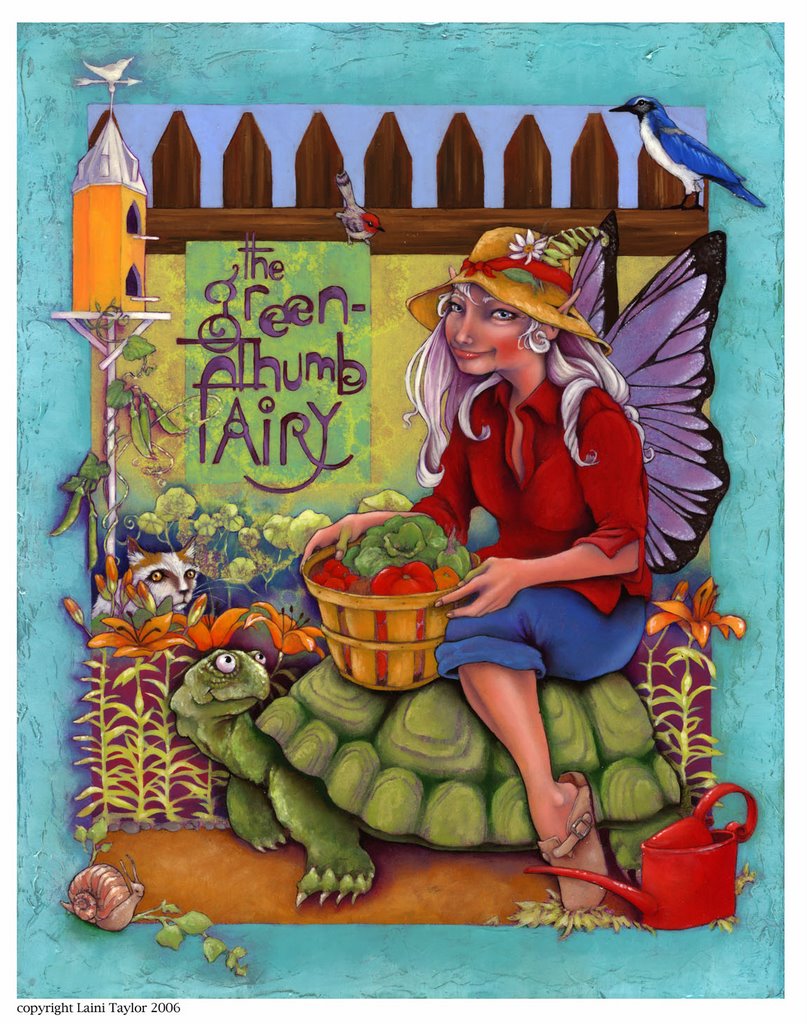
It makes me laugh, now, the perversity of it. I was editing travel guides for Lonely Planet by then, and I had enough words in my life. I couldn't make myself write after work. But I had a creative void to fill, and I did fill it. I started to draw. I took a class in illustrating children's books. Then a watercolor class... then a life-drawing class... and the next thing I knew I was dropping out of my "professional" life to wait tables and go to art school! This actually occurred in a space of two or three years, but in my memory it's like a snap of the fingers.
In all that time, I wasn't writing. But that's okay, because it was learning to draw that taught me to write. I really believe that. Drawing was a new, mysterious world, and it had the benefit of immediacy. You draw it and it's there; the visual connection is immediate. As hard as it is to draw well... let me see if I can explain... you can't decieve yourself, can you? A whole notebook filled with disconnected beautiful sentences, well, someone really dedicated to fooling themselves might be persuaded they were actually "writing". But an incomplete drawing is plainly nothing more than an incomplete drawing. Drawing began to strip away the nonsense and to teach me to work towards a finished product, to just keep going and make it happen. It also gave me a repetoire of tricks. I learned that the first version of a drawing is rarely as good as it's going to get. You can start over, or you can build on what you have, refining it.
My "trick" for making my drawings better is tracing paper. I don't trace photos or other people's drawings -- I trace my own rough drawing and make it better as I go, then I flip over the tracing paper and further refine it on the other side. Seeing the mirror image gives me a new perspective, as well as allowing me to add detail without messing up what I've already drawn. This frees me. It's just the trick my particular brain needs. I particulary recommend it to perfectionists and detail-lovers. Big, bold, fearless types probably won't enjoy it. I am NOT a fearless type. I am a perfectionist in the worst sense: I am paralyzed by it, afraid to write a scene lest it not be the BEST incarnation of the scene possible in the universe, afraid to disrupt the white page lest the line not be just the beautiful line Destiny has in mind for that particular canvas...
Rubbish!! I've got tricks now to get past that. I never draw directly onto the surface I'm going to paint, be it canvas or whatever, because I KNOW my first drawing won't be good enough for me. So I do my drawing on tracing paper, reworking it until I love it (often this takes place over many layers of tracings), and then transfer it. Well, this translates to my writing, too. This is going to sound kind of insane to brave people who are NOT crippled by perfectionism, but... I can rarely write right into my actual chapter document. Right off, if my page reads 'Chapter One', I feel pressure for the words to come out perfectly as if dictated by god in good mood. Then I get stuck in sentence-perfecting mode. I've gotten around this by having TWO documents open on my laptop: my chapter document, and my "working" document, in which anything goes. There, amid the mess of unfinished thoughts and plentiful 'what ifs', I can actually get some storytelling done! When I say it like this I realize two things: 1) I am absurdly easy to fool; and 2) It must sound a little insane. I wonder if anyone else has to go to such great lengths to trick themselves?
The really good news is that the writers who tell you it gets easier, that with practice it does eventually start to flow, they're not lying! I was so sure they were! That when they would say things like "the characters took over the story", they were just being spiteful, but at last I've begun to experience it. (I still feel great skepticism when I hear things like how William Styron claims he wrote Sophie's Choice straight through without outlining it or ever going back to make corrections, like it stepped whole from his head like Athena. He MUST be lying!!) I never thought it would happen to me that I would love the actual process of writing, and not just the finished product, but it HAS. Sometimes - SOMETIMES - I even find myself writing with a smile on my face, my fingers racing to keep up with the flow of the story, and on REALLY good days, I want to high-five myself at the end of a scene! Mind you, not all days are like this. But enough are. And I'm pretty sure that if I hadn't taken up drawing, I might never have discovered the joy of storytelling -- I might still be stringing words like pearls into beautiful sentences that lead nowhere. Learning a new process has opened up doors in my mind... or maybe it inserted funhouse mirrors into my brain that made me see things in a new way? I don't know, but at long last, something clicked, and now that I know I can do it, I'm never going to stop!

 The prompt for Sunday Scribblings this week is to tell the story of how you came to live where you live.