Oooh, this is so weird. I have a ghost post loose somewhere in my blog. Either that, or technical difficulties. I had posted my "Third Day" book review (with much difficulty from blogger), but it wouldn't allow comments, and when I checked my archive of posts, it WASN'T THERE. Weird! And, as if the act of noticing it didn't really exist made this post also take note of its own phantom status, it promptly vanished. So I'm reposting it, hopefully with pictures this time!
So this is it, the first “meeting” of the Third Day Book Club, the brainchild of the fabulous
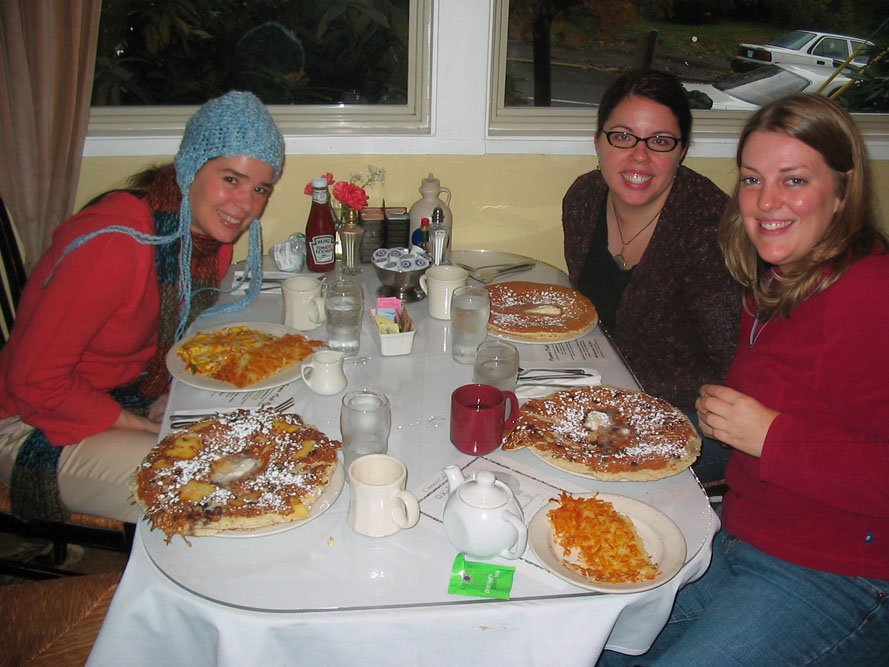
Patry. I must admit, I don’t even know who the other members are, but I wish we were all in someone’s living room drinking wine and talking about this amazing book! Fellow readers, I raise my glass (or in this case, my coffee cup) to you.
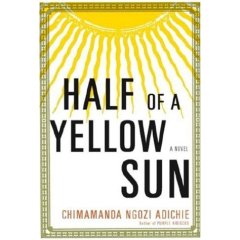
Half of a Yellow Sun by Chimamanda Ngozi Adichie, is a novel about a war I had - ulp! - never heard of, the ill-fated Biafran war for independence from Nigeria, which spanned the mid-1960s. And while it is a novel of war, the story is relatively small in scope, focusing on a few lives and how they are changed by the events around them, not trying to explain or “teach” the war. There is very little “big picture” analysis. I’m not quite sure exactly how this book club is meant to work, but instead of going into any kind of synopsis, I’ll just say to those of you who haven’t read this book: it is engrossing from the very first paragraph, the characters are vivid and real and warm, and I am left with a feeling of having had an inside glimpse at wartime life that goes so much deeper than news reports and death tolls.
I also couldn’t help thinking, reading this book, of another war, one that is going on right now. One of the things I would do if I had infinite time on my hands, is take more history classes. I have such a skimpy understanding of geopolitics, and there are intriguing hints in Half of a Yellow Sun about the imperialist history of British Nigeria, about how the country was formed, and how that history paved the way to the Biafran secession. I got the idea that the British had, for reasons all their own, drawn lines on a map of Africa and carved out a country and named it Nigeria. In this new country were a number of ethnic groups with their own unique cultures and religions, bound together by nothing but this British-drawn border (sound familiar?). The British played the Hausa, Igbo, and Yoruba people against each other for their own reasons, perhaps even inciting the terrible massacre of the Igbo that kicked off the civil war. I would like to understand better the history of white people mucking around with nation-building. I had such a feeling of outrage reading Barbara Kingsolver’s Poisonwood Bible years ago, and discovering how the US was responsible for propping up Mobutu in Congo. And seeing Syriana recently, the fictional depiction of the US interests ensuring a playboy puppet would come to power in a nameless Mid-east nation, because he would be easier to manipulate than his more serious, reform-minded brother. It all gives me a helpless sense that humanity really is a bunch of monkeys that are just intelligent enough to be highly, highly destructive.
But back to the book! One thing that sticks in my mind a few weeks after finishing it is this question: when writing a book about tragic times, is the writer compelled to inflict personal tragedy upon his/her characters? That is, in a book about war, must the characters suffer personal loss? I’ve had this conversation with Jim, who sometimes gets angry at writers for killing characters, but I think they must. As much as we readers pray for characters to make it through books like this, there would be a sense of “cheating” the reality if some major characters did not die. That sounds morbid, but if everyone comes out okay, it would leave the readers with a false sense that the generality of people who went through that war also came out “okay.” Books like this function for readers like me as a microcosm of events. This is the first I have ever really heard of the Biafran War, so it is essentially all I know. If it ended well, would I subconsciously associate that ending with the war in its entirety?
Last year I read an amazing book about the Northern Italian arena of WWII, called A Thread of Grace that I recommend VERY HIGHLY, and without giving specifics, the end of that book is like repeated gut punches. It wrings you out. There is no reprieve, no little happy place you can retreat to and feel that anyone came out of that war “okay”. It is visceral and haunting, and that is the only way to depict war. War is death. So much needless death. And war fiction sort of HAS to clobber you with it. And Half of a Yellow Sun does, though certainly not with nearly the grimness of A Thread of Grace. All in all, there is a kind of return to life at the end of the book, such as there wasn’t and couldn’t have been in A Thread of Grace.
I’m curious to read what others have written about this book, but I’ll throw in a few other comments: I loved the characters, Ugwu especially, and I found the opening completely absorping, though it was such a small kind of scene, a young boy going to his new job, I was engrossed, rooting for him. And a line that really really sticks in my head is Kainene telling Olanna she sometimes hates the refugees for dying. I thought that was a powerfully truthful thing to say, to admit. I also kept thinking repeatedly of all the people in all the conflicts throughout Africa and the rest of this damned planet, currently living in the kind of horrific conditions the refugees endure in this book. The starvation, the rapes, the massacres. And sitting home in America, it is so easy to forget it all. Again, that’s the power of fiction, to make us SEE, if only we pick up the right books. Like The Kite Runner, and Half of a Yellow Sun. In a way, it should be our homework as citizens of the world, to read books like this, to SEE, to KNOW. To not vote for people who will make more wars. To perhaps do more than simply vote, but do. . . something.


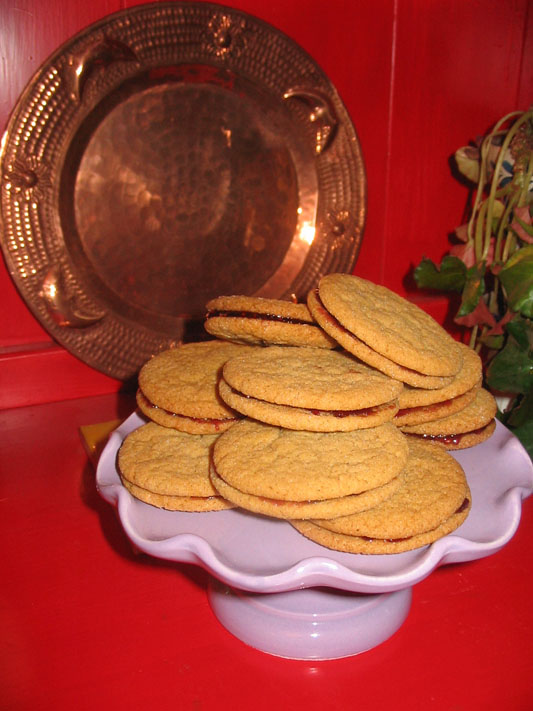 This is the third year I've made them and they are becoming one of my favorites. Here's the recipe, originally from Martha: